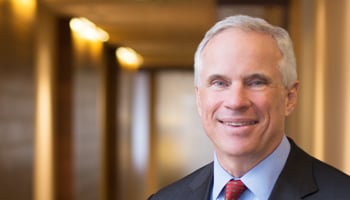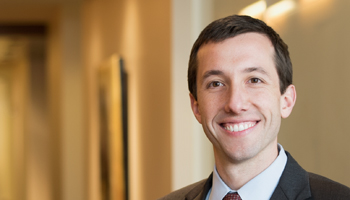

Balch Managing Partner Stan Blanton and Nuclear Energy partner Alan Lovett discuss the financial and execution risks facing nuclear developers as interest in new nuclear generation grows, and how incremental development, risk sharing, and early stakeholder alignment can help companies move projects forward with greater clarity.
New nuclear projects can involve significant capital commitments, long development and construction timelines, and complex coordination among investors, customers, regulators, government and other stakeholders. For developers under pressure to advance new generation, the question is not only whether to move forward, but how to manage risk while preserving flexibility. Stan and Alan discuss practical approaches including sharing risk, taking incremental steps to better understand resource commitments, and engaging stakeholders early—along with the value of experience across the full lifecycle of a major nuclear project.
GET AHEAD OF THE CURRENT
In Balch & Bingham’s Get Ahead of the Current Video series, our attorneys share insight on the issues shaping the energy industry and other highly regulated sectors, along with the experience, perspective, and client-focused approach they bring to helping organizations prepare for what’s next.
Stan Blanton is Balch’s Managing Partner and Chair of the firm’s Nuclear Energy Practice. His practice concentrates on the regulatory, licensing, and commercial issues that arise in the development, operation, and sale of electric generating facilities, particularly nuclear power plants. He is one of the nation’s leading lawyers in nuclear regulation and policy.
Alan Lovett is a partner in the firm’s Nuclear Energy Practice. He counsels electric utility companies who own a diverse mix of generation resources in all manner of commercial and regulatory matters. A key focus area of his practice involves serving owners and operators of nuclear generation facilities. Alan’s nuclear practice spans new plant construction, operating fleet matters, decommissioning, recommissioning, and nuclear transactions, including expertise in commercial and regulatory matters.
TRANSCRIPT:
Stan: We’re the only firm that has been counsel to a company that constructed a nuclear plant in the last 40 years.
Alan: We’ve been through every stage of a nuclear project with our nuclear team, deeply embedded. We can provide a lot of practical advice and experience to help reduce a lot of the scariness of a nuclear project on the front end.
Stan: I think the main challenge for nuclear power plant developers is still the cost of a nuclear unit and the time it takes to construct the nuclear unit and the financial risk that's involved in that.
Alan: …A lot of pressure from external forces to build out new nuclear in an environment where the investor community hasn't fully accepted that as what they want these companies to do.
Stan: What nuclear developers are looking for now is a way to mitigate that risk probably by sharing it among other entities or maybe the government…
Alan: Without saying on day one, we are going to undertake a $20 billion project, which is a scary thing to do, we have done a lot of work helping people incrementally step their way through the process so that they feel better about their own ability to do it. They have a better understanding of the actual resource commitment.
Stan: They need to engage with other stakeholders and the nuclear industry's always been a very mutual and cooperative industry. And so, the only way those kind of risks can be mitigated is to work with other companies to develop nuclear supply chains and the construction infrastructure that exists for a lot of industries, but it doesn't really exist for the nuclear industry in the United States right now. They’ve got to build that back and it takes more than one plant to build that back.
Alan: One of the things that sets the Balch team apart is our experience on the Vogtle project. And so that gives us a perspective that it's hard to replicate because while we might be helping people on the first 5% of the work right now because we're still kind of in the early development phase, we know what the other 95% looks like because we lived it for a decade.
Stan: We were involved through the licensing. We were involved through the negotiation and drafting of all the commercial agreements. We were involved in the resolution of disputes that invariably come up during a large construction project like this.
Alan: We bring a degree of comfort just in the form of a little bit less uncertainty.
Stan: We had about every kind of issue that can arise during the construction of a nuclear plant or any mega project really. I think every section of the firm probably participated at some point in that project solving problems for the client.
Alan: We gained a lot of experience through that, that now benefits all of our clients.
Stan: We feel like we're part of the nuclear industry. We know the regulators, we know the policy makers.
Alan: And we can help navigate the complexity of the project. We can be an expansion of our client's skill sets, and that's a big way that our team helps our clients stay ahead of the current.
Stan: So we really kind of think of ourselves as part of that management team and so we stay ahead of the curve by participating in the decision making process rather than just having an inbox where assignments come in.